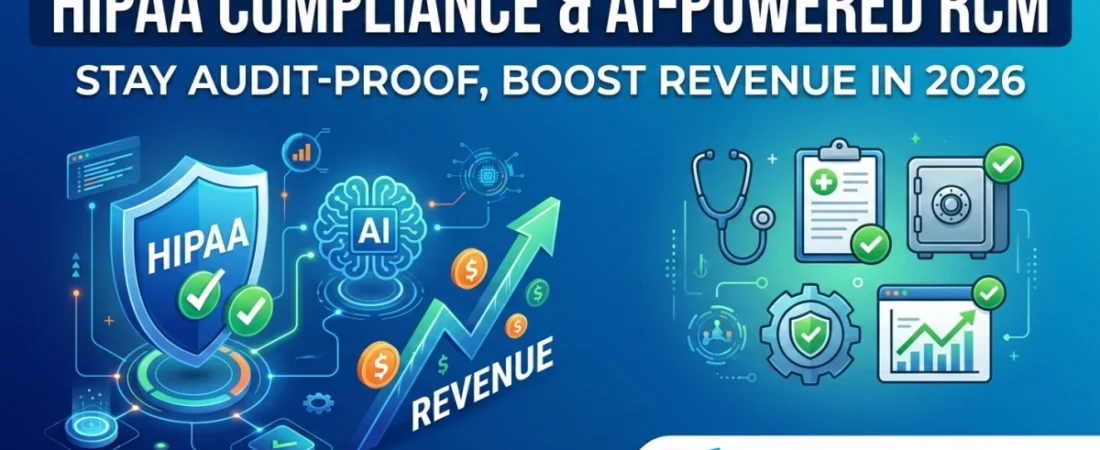
In March 2026, HIPAA compliance has evolved from a checkbox to a high-stakes imperative for medical practices. With the long-awaited HIPAA Security Rule updates (proposed in late 2024 and targeted for finalization around May 2026, with compliance deadlines likely mid-to-late 2026), covered entities face mandatory changes: end-to-end encryption for ePHI (at rest and in transit), mandatory multi-factor authentication (MFA) across all access points, stricter risk analysis requirements, network segmentation, enhanced incident response, and annual verification of business associate (BA) security controls.
These aren’t optional tweaks—failure to comply can trigger OCR enforcement actions, with penalties reaching $50,000+ per violation (up to millions in severe cases), corrective action plans, and reputational damage from breaches averaging $7-10M in healthcare. Small-to-mid-sized practices are particularly vulnerable: over 70% still conduct inadequate or outdated HIPAA Security Risk Assessments (SRAs), making them prime targets for audits amid rising cybersecurity threats.
At the same time, AI-powered revenue cycle management (RCM) is transforming billing—predicting denials, automating coding, accelerating prior auth, and improving first-pass rates to 92-97%. The challenge? Integrating AI without introducing new HIPAA risks.
Forward-thinking practices are solving both: using compliant AI to strengthen compliance while boosting revenue by 5-10%+ through fewer denials, faster collections, and reduced administrative overhead.
At RevGen Billing, our AI-enhanced RCM platform is built with HIPAA at its core—delivering audit-proof operations and measurable financial gains. This guide explains the 2026 landscape, key risks, and proven strategies to stay compliant while turning RCM into a revenue engine.
The 2026 HIPAA Compliance Storm: Key Changes & Rising Risks
Recent regulatory shifts include:
- Mandatory Safeguards — No more “addressable” vs. “required”; encryption, MFA, and access controls are now non-negotiable for all ePHI.
- Stricter Business Associate Oversight — Practices must obtain annual written proof of BA security (e.g., SOC 2 Type II, HITRUST certifications); weak BAAs shift liability back to you.
- Expanded Risk Analysis — Ongoing, documented SRAs (not one-time); OCR enforcement focuses on failures here, with penalties tied to unaddressed risks.
- 42 CFR Part 2 Alignment — Updated Notices of Privacy Practices (NPPs) deadline passed February 16, 2026, with extra protections for substance use disorder records.
- AI & Emerging Tech Scrutiny — Guidance on AI use in healthcare (expected Q1-Q2 2026) emphasizes PHI minimization, transparency, and audit trails.
Top risks for practices in 2026:
- Inadequate vendor vetting → breaches via third-party billing tools.
- Manual processes → human error in documentation/coding leading to False Claims Act exposure.
- Outdated systems → failure to meet encryption/MFA mandates.
How AI-Powered RCM Strengthens HIPAA Compliance in 2026
AI isn’t a compliance threat—when implemented correctly, it’s a powerful ally:
- Automated Risk Monitoring — AI flags anomalies in access logs, predicts breach risks, and automates SRA elements (e.g., vulnerability scanning).
- PHI Minimization & Encryption Built-In — Compliant platforms encrypt data end-to-end, redact PHI in workflows, and enforce least-privilege access.
- Audit-Ready Trails — Tamper-evident logging of every AI-assisted action (e.g., code suggestions, denial predictions) supports OCR requests.
- Vendor Compliance Assurance — RevGen provides signed BAAs, annual security attestations, and SOC 2-aligned infrastructure.
Result: Practices reduce breach likelihood while meeting mandatory safeguards.
Boost Revenue Without Compromising Compliance: 5 Strategies for 2026
- Adopt HIPAA-Compliant AI RCM Tools — Use platforms with native encryption, MFA, and PHI governance to automate claims scrubbing, denial prediction, and coding—cutting denials 40-60% and A/R days 20-40%.
- Conduct & Document Continuous SRAs — Leverage AI to streamline risk assessments quarterly; address findings immediately to avoid OCR scrutiny.
- Vet & Monitor BAs Rigorously — Require annual security proofs from billing partners; choose vendors with proven HIPAA-aligned AI (no PHI training on models without de-identification).
- Implement Mandatory Technical Controls — Enforce MFA/encryption across EHR, PM, and RCM systems; automate access reviews.
- Train Staff on AI + Compliance — Educate teams on using AI ethically (e.g., human review of high-risk claims) and recognizing phishing/social engineering.
One RevGen client (8-provider group) integrated our compliant AI RCM in early 2026: denials fell 52%, collections rose 8.4% ($92K+ annualized), and they passed a mock OCR audit with zero findings—thanks to built-in logging and risk flagging.
The Bottom Line: Compliance + AI = Competitive Advantage in 2026
HIPAA 2026 isn’t about survival—it’s about thriving. Practices that pair strict compliance with AI-powered RCM protect against audits/fines while unlocking hidden revenue from cleaner claims and faster payments.
Don’t risk your practice on outdated processes. Schedule your free RevGen Billing Audit today. We review 50-100 recent claims, deliver a 5-7 page personalized report in 48 hours revealing:
- Compliance gaps (HIPAA risks, coding/documentation issues)
- Revenue leaks from denials/underpayments
- AI/RCM opportunities tailored to your practice
Zero cost. Zero obligation. Full value.
Visit revgenbilling.com or email revgenbilling@gmail.com now. Stay audit-proof and revenue-strong in 2026.
What’s your biggest HIPAA or RCM worry right now? Comment below—our team shares quick, compliant tips.